Holy Wars, Holy Texts, Holy Living

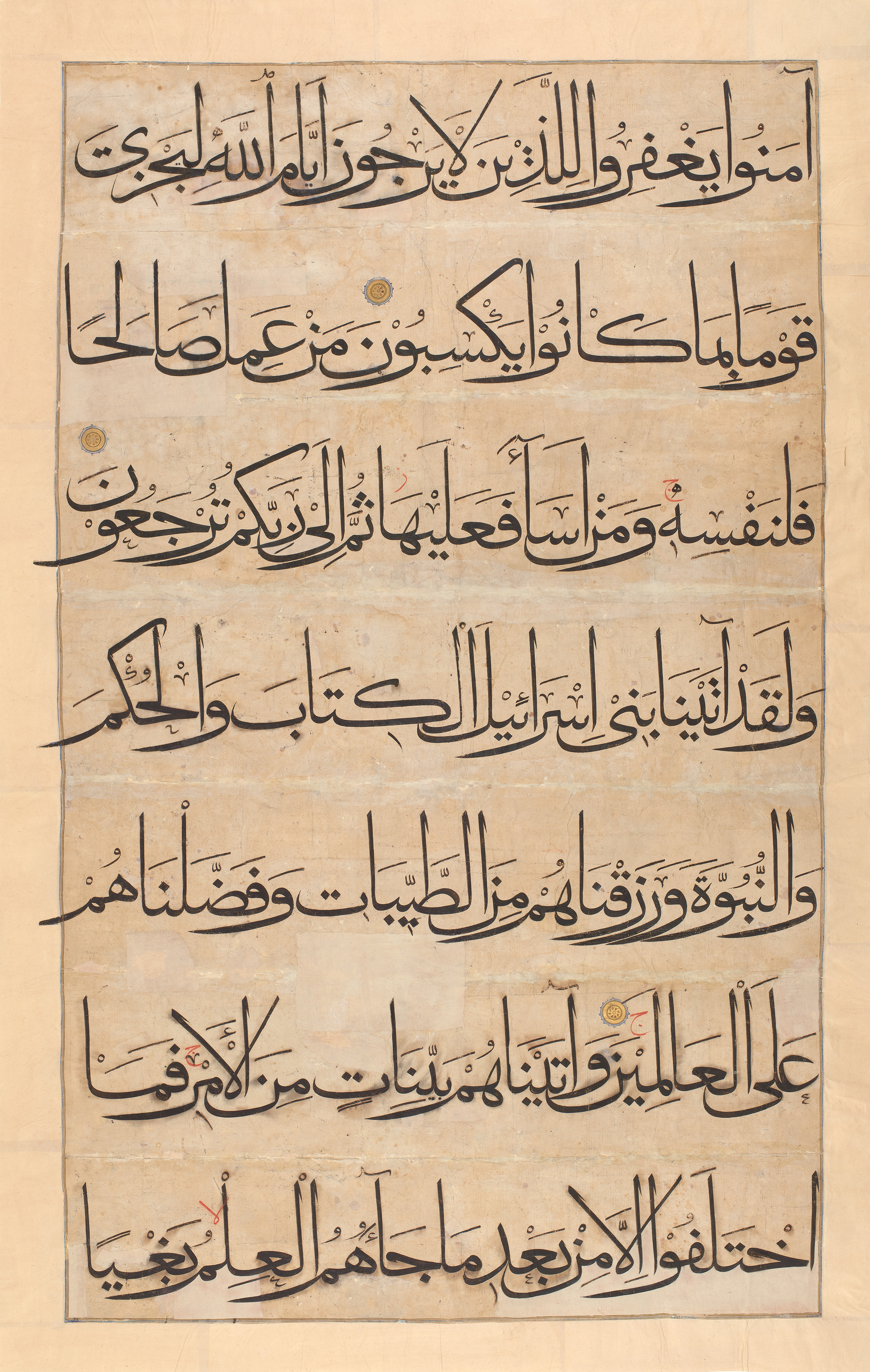
Per Tall Skinny Kiwi's call for bloggers, I'm blogging a reading from the Qur'an today. Even though the planned publicity stunt burning didn't take place, there's no reason not to fill the void of hate with education.

When Jesus is asked what is the greatest commandment, Jesus replies with the Shema (Deut 6:4-9) and a commandment about loving your neighbor. Here it is in Christianity and in Islam side by side:

"You shall love the Lord your God with all your heart, and with all your soul, and with all your mind, and with all your strength.’ The second is this, ‘You shall love your neighbor as yourself.’ There is no other commandment greater than these.”
Mark 12:30-31, NRSV
"Worship Allah and join none with him (in worship); and do good to parents, kinsfolk, orphans, the poor, the neighbor who is near of kin, the neighbor who is stranger, the companion by your side"
Qur'an, chapter 4, verse 36
The verse in the Qur'an actually has many translations due to the difficulty of translating Arabic to English. Here's a list of the varied translations. But the key point of difficulty is the first section: Worship Allah and join none with him. This first verse is a direct challenge to the claims of Christianity that Jesus was God's son.  On the Dome of the Rock at Mecca, it is inscribed in various places that Jesus was just a messenger and that it is unthinkable that God would have a son or embodied divinity. This was inscribed after the Crusades (Christians v. Muslims) and is thus a political as well as theological statement.

We would think this would be a stumbling block to relations with Islam and Christianity, but if you think about it, the Jewish faith has denied Jesus' Messiahship since the Incarnation. They deny the basic tenet of our faith: that God has a son who is the Messiah and is Jesus Christ. Both of these world religions deny the basic building block of Christianity: the Incarnation. I cannot tell you how much of my theology is built on the Incarnation, and thus it is an important affirmation.

And yet in the verse above, theology is in an uneasy marriage to praxis (action). It's OK to make a theological affirmation, but join hands and serve one another even those who are infidels, heretics, or violent towards you.

Thus in the Qur'an verse above, we have the model for interfaith living. Make your theological affirmations, hold tight to them, and serve your neighbor with the highest of ideals. Interfaith centers, places of worship, theological seminaries (ie. Claremont), global responses to tragedy: they all hold tight to their faith but put their hands and feet in service to their neighbor.

It's true that we disagree on the basic precepts of our theology and will likely never come to agreement. But it is also true that each religion is called by their holy books to holy living.  Our history has a bloody past of errant Holy Wars, from the Crusades to today. When we place our theological certainty atop of action and care for our neighbor, we fall short. We try to burn what we have built. Maybe we can continue the tradition of Holy Living, of holding fast to our beliefs but unclenching our fists and serving the world around us.

May our future hope shine brighter than the flames of intolerance and hatred.

Read more...

'Two-for-One Clergy' For the Weekend

Beliefnet has a decent article on an Episcopal Bishop-elect in Michigan who is also a Buddhist. Check it out here: "One Priest, Two Faiths."

Essentially, some Episcopalians are angry that this Bishop-elect holds what they view as competing beliefs and thus is unfit to be a bishop.  This is called syncretism meaning "holding multiple religions."  To those who believe in the exclusivity of their religion against all others, this is unacceptable for a bishop.

Let's make this an open weekend conversation. What do you think?

  • Can people hold tenets of different faiths in our culture which is increasingly blending even as it is separating?
  • Can religious leaders find meaning in two separate paths without losing their way?
  • Does this really matter unless it is affecting their spiritual leadership? 
Discuss and enjoy the weekend!

Read more...

Interfaith Musings: Charity Competitions

YANGON, BURMA - MAY 10:  Burmese children wait...Image by Getty Images via DaylifeAt the Gospel for Asia (GFA) annual conference, a missionary spoke about Myanmar missions were bearing fruit (via Ray Fowler):

More than 1.6 million homes were destroyed and 1.3 million acres of fertile crop land were damaged as the cyclone swept across an area known as “the rice bowl of Myanmar.”

Then GFA missionaries and volunteers showed up with emergency food and supplies. The missionary leader himself was on the crew of volunteers who helped serve food to survivors who took refuge at the GFA Bible College in Yangon (Rangoon). He, and every other missionary who served with him, were letting their lives preach the sermons during those days.
To an extent, this is what I was struggling with on a previous post (Hacking the Apostle's Creed).  I think there are times to celebrate missions over conversions. 

I remember a story of the first supply plane that landed after a terrible storm in Africa, and the people who were without food or water gathered around the plane.  The suppliers opened boxes and started handing out....bibles.  Whoops.

So, kudos to the missionaries for appropriate action.  However, there is still a comparative aspect to the action that bothers me:
The people in this majority Buddhist country were stunned at the love these Christians showed to them. Two families who went without food for seven days after the storm articulated their thoughts about Jesus to the missionaries who brought them food.
Buddha did nothing while we were suffering. But your Jesus loves us,” the missionary reported. “Now every Sunday they are coming to church and worshipping the Lord.”
I'm unsure how I feel about criticizing the humane ethic of other religions and turning charity into a competition.  While I know the missionary is recounting the words of another, emphasizing the "superior" help of Christianity over Buddhism is not very nice, nor accurate.  While the numbers may say that Christians help more people than Buddhists, that doesn't mean that Christians are "better" than Buddhists.

In short, charity shouldn't be a competition between faiths, or even between churches or groups within the same faith.  We all do what we can, and be thankful for the opportunity to help.

Thoughts?

Zemanta Pixie

Read more...

Interfaith Musings: Charts

A blog I just found has a chart comparing some religions.  There may be a flaw in it, but it can be useful when comparing Christianity to other religions. 


Here's one of the charts:  Pay attention to the side categories (see how in Christianity that God is Uncreated and Unseen, with angels as created and unseen, while humans are created and seen).   Got it?  OK, compare it to the right side's Buddhism and Hinduism.


(click on them to enlarge them)
Essentially, what the author is saying is that comparing the Judeo-Christian God to the gods in Buddhism and Hinduism is a bad comparison.   From the blog post:

Hopefully this makes it clearer why it is NOT legitimate to compare Pagan, Buddhist and Hindu gods to the creator God we Christians worship, how such comparisons involve a category confusion and how, amongst other things, such gods and goddesses are more meaningfully compared to angels. In you want to understand how the Christian God compares to other non-Abrahamic paths, it is more meaningful to explore concepts like karma and mu.
Simplistic, but helpful.  And as the author explains further on his blog post, he doesn't mean to ascribe value by making them upper-middle-lower.


Thoughts on these charts?  Are they helpful for interfaith dialogue and comparison, or are they trying to ascribe a common paradigm to religions that are structurally just...different!


On a goofy endnote, if you apply the categories above to Star Wars, here's what you get:

For those of you sadly unaware of midiclorians
they came about in the prequels. Sad, I know.
As you can see, like most things in Star Wars, it correlates more to Eastern religions than Judeo-Christian ones.


I'm a nerd.


Zemanta Pixie

Read more...

Comment via FriendConnect

Favorite Sites

Latest from the Methoblog

Search the Methodist World

Want to see more United Methodist responses to a topic? Enter the topic into this search engine and search ONLY methodist blogs and sites!

UMJeremy's shared items

Disclaimer: all original content reflects the personal opinions of Rev. Jeremy Smith, not the doctrinal positions or statements of the United Methodist Church local and global.
all linked or quoted content represent the source's opinions, not Jeremy or the United Methodist Church.

  Blogger Template © Ourblogtemplates.com 2008

Back to TOP